
Summary
- The IDR elimination will add more than 40% more limited partnership units outstanding.
- Mr. Market does not appear to like the transaction that eliminated the IDRs.
- The transaction eliminating the IDRs appears beneficial to CNX Resources at the expense of the partnership.
- The cash payments and the terms of the IDR elimination appear to point to financial stress at CNX Resources.
- Further pricing pressure on CNX Midstream units in the near future appears likely.
- This idea was discussed in more depth with members of my private investing community, Oil & Gas Value Research. Get started today »
CNX Midstream (CNXM) is a captive midstream company whose only customer is CNX Resources (CNX). This partnership issues a K-1. As such, the future growth prospects are determined by the growth prospects of the parent company. As I noted in a previous article, the parent company, CNX Resources, is a dry gas producer whose cash flow is clearly declining during this period of weak natural gas prices. Therefore, some pressure has been put on the partnership to help the parent company out during this financially stressful time. That pressure may benefit the shareholders of CNX Resources at the expense of the partnership shareholders.
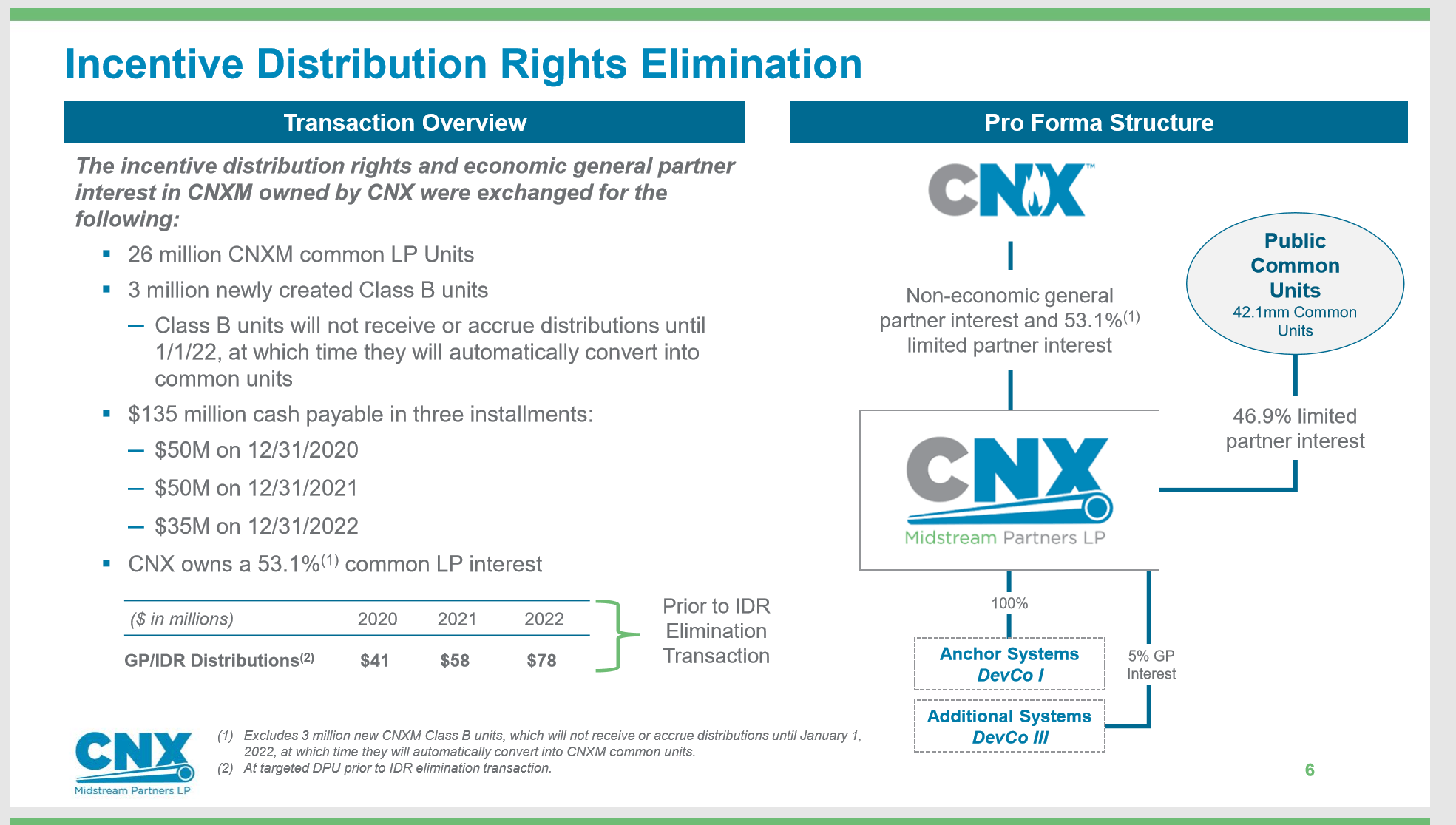
(Source: CNX Midstream Fourth Quarter 2019 Earnings Conference Call Slide Presentation)
The partnership issued a relatively generous amount of 26 million limited partner shares and another 3 million class B units that will eventually convert to limited partner shares. That issuance doubled the common limited partner holdings in the limited partnership at a time when industry conditions are less than optimal.
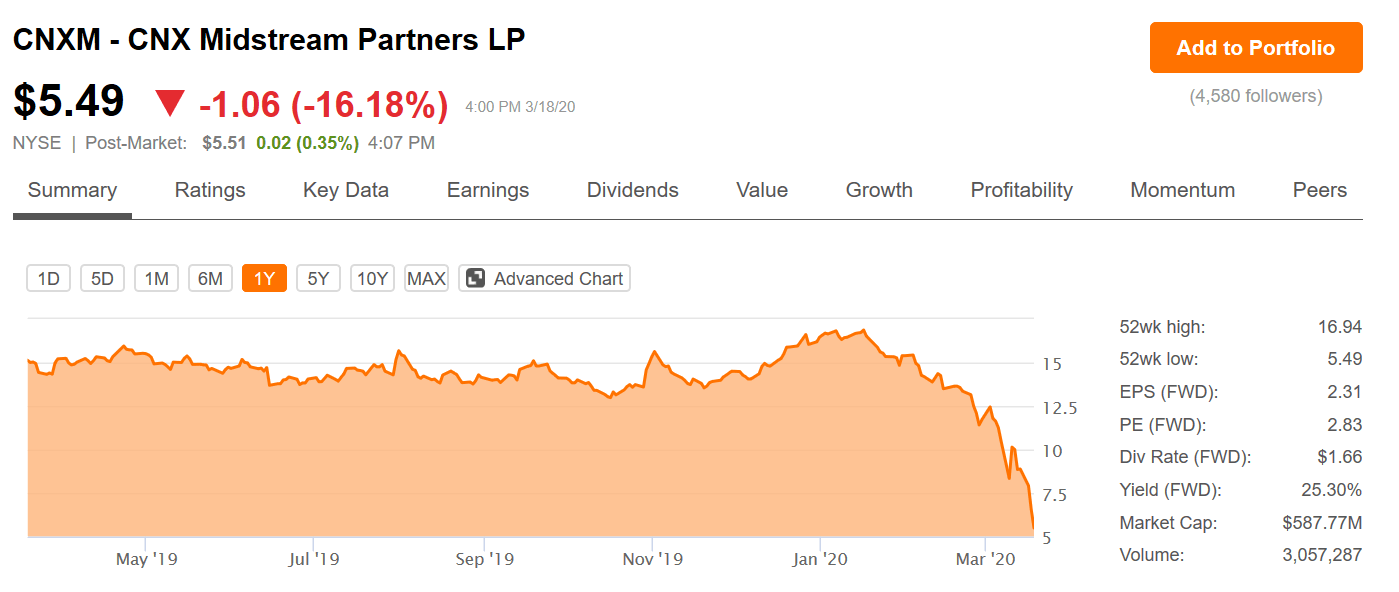
(Source: Seeking Alpha, March 18, 2020)
Evidently, the market has not taken the roughly more than 40% dilution news very well. Even the announcement of a more than 3% increase in the distribution has not stemmed the slide of these limited partner units.
Clearly, Mr. Market has some worries that management has not stated in the communications with investors. Those worries have to be the consequences that follow from the declining natural gas prices.

